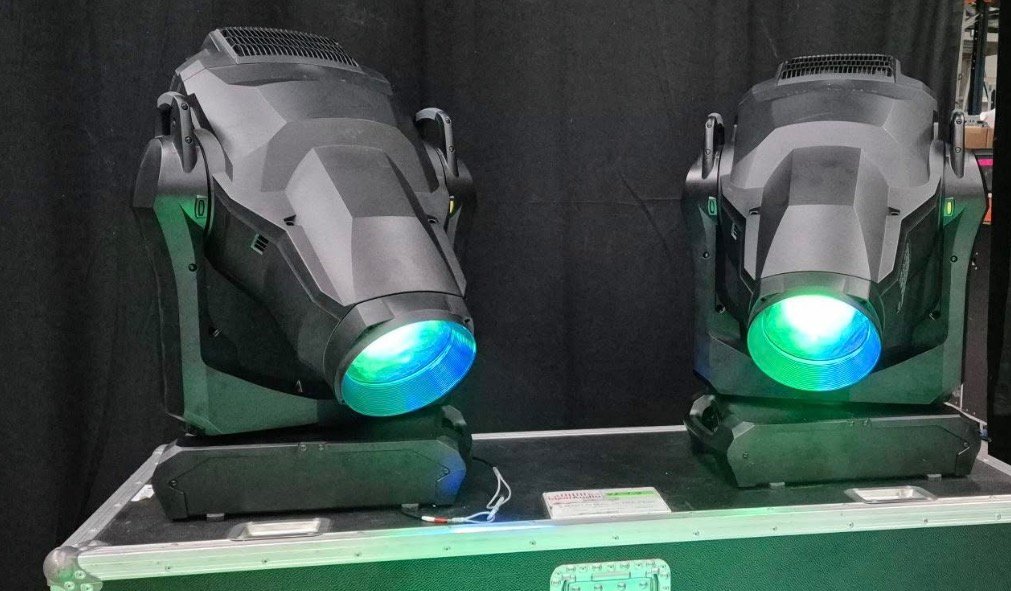
Martin MAC Ultra Performance is offered in excellent condition at €2,000 per unit. Available stock: 10 units. The quantity is the available inventory count; the price applies to one unit.
Martin MAC Ultra Performance: LED profile with framing
The Martin MAC Ultra Performance is a moving-head LED profile designed around a 1,150 W proprietary light engine. Martin specifies 46,500 lumens of fixture output and a 1:7 zoom system. The model combines its source and optics with a framing module, making it relevant when a lighting design needs shaped light, projected detail and controlled stage coverage from the same moving fixture.
The Performance name is significant within Martin’s product range. A profile with framing should be selected for the actual effects and beam control required; specifications from a MAC Ultra Wash or another MAC fixture should not be substituted simply because the family name is shared.
Color, texture and shape
Its published feature set includes CMY color mixing, variable CTO, two rotating gobo wheels and an animation wheel. Iris, frost and prism effects add further ways to change the projected result. Martin’s Extended Framing system gives the operator another means of shaping output, beyond selecting a gobo or changing the zoom.
For a buyer planning a production, consider these controls in terms of the looks they need to produce: color transitions, changes in texture, a shaped field and movement between positions are separate programming tasks. Check the official specification and operating documentation for the chosen control mode and installation requirements. Manufacturer output figures describe the model under the stated measurement conditions; they do not establish remaining light-engine life, service history or measured output of any individual item in this stock.
Reading light output and zoom together
Fixture output and field size answer different design questions. The published lumen figure describes an amount of light under the manufacturer’s measurement conditions, while zoom determines how that light is distributed. For a production buyer, the useful comparison is the result required at the planned throw: an even area of stage light, a narrow textured image or a framed field. A large source specification alone does not resolve that choice.
The MAC Ultra Performance’s zoom and motorized focus are part of that optical workflow. Zoom changes the scale of the field; focus determines the treatment of its edge and projected pattern. A designer can plan those changes separately, particularly when a cue moves between an aerial effect and a surface projection. The actual fixture position remains part of the calculation.
CMY and CTO as separate color tools
CMY mixing gives control over the color treatment of the white-source output. CTO serves a different purpose by shifting the white-light treatment toward a warmer appearance. Keeping these controls separate in the design makes it easier to decide whether a cue needs a saturated color, a chosen white tone or a transition between them.
A camera-led stage picture, a theatrical scene and a high-contrast concert look can place different priorities on color. The MAC Ultra Performance offers several color-control tools, but a product feature list cannot decide the intended result. Compare the available controls with the production’s actual needs, then use the official fixture documentation for the relevant range and control behavior.
Two gobo layers and an animation wheel
Two rotating gobo wheels let texture be built in layers rather than from one pattern alone. Choosing a single graphic is one approach; combining patterns is another. The animation wheel provides an additional way to move a texture. These tools are most useful when the programmer treats image choice, movement and focus as related creative decisions rather than switching every effect on at once.
A slow texture change can support a static composition, while a faster pattern movement can become a visible event in its own right. The appropriate result depends on the music, scene or visual concept. These are programming considerations, not promises that a particular factory gobo or effect program will suit every production. Review the exact manufacturer reference when preparing a show file.
Framing an area rather than changing a pattern
A framing system shapes the boundary of the light. That is different from placing a gobo image inside the field, or using an iris to change a circular opening. The distinction is valuable when comparing profile fixtures: a design that needs a controlled rectangular area is asking for a different optical function from a design centered on texture.
Martin’s Extended Framing arrangement is a prominent part of this model. The planning question is how the available blade movement and module rotation relate to the intended position and illuminated surface. A framing effect should be assessed from the actual throw and angle of incidence, rather than inferred solely from a front-view illustration of a fixture.
Prism, frost and transition design
A prism multiplies or separates a projected image, while frost changes its softness. Those are distinct effects and can create different transitions even from the same starting cue. One may introduce a repeated geometric composition; the other may reduce the definition of an image or field. Their usefulness depends on the intended stage picture and the presence of other light in the scene.
When planning cues, consider whether a transition should expose the mechanics of an effect or keep the change subtle. Position, intensity, color and texture do not have to change at the same speed. A coherent sequence can give each element a specific purpose. This is an approach to programming the model’s documented tools, rather than a claim about a supplied show file.
Selecting the model for an existing lighting fleet
The MAC Ultra Performance combines LED-source operation with profile optics and framing. Those three characteristics should be considered together when comparing it with discharge-source profiles or non-framing wash fixtures. A shared manufacturer name does not make their control personalities, sources or visual roles identical.
For a fleet addition, compare the required functions and control modes before preparing a patch. The current technical document should be used for exact channel assignments and installation details. This stock is described as excellent by the seller, but manufacturer specifications should remain separate from claims about individual operating hours, service records or measured light output. Only the named fixture is established by the inventory description.
Related lighting equipment
Browse lighting fixtures at Bsound Pro Audio.
Official manufacturer support
Consult the official Martin MAC Ultra Performance support collection for product-specific manufacturer references.
There are no reviews yet. Be the first one to write one.