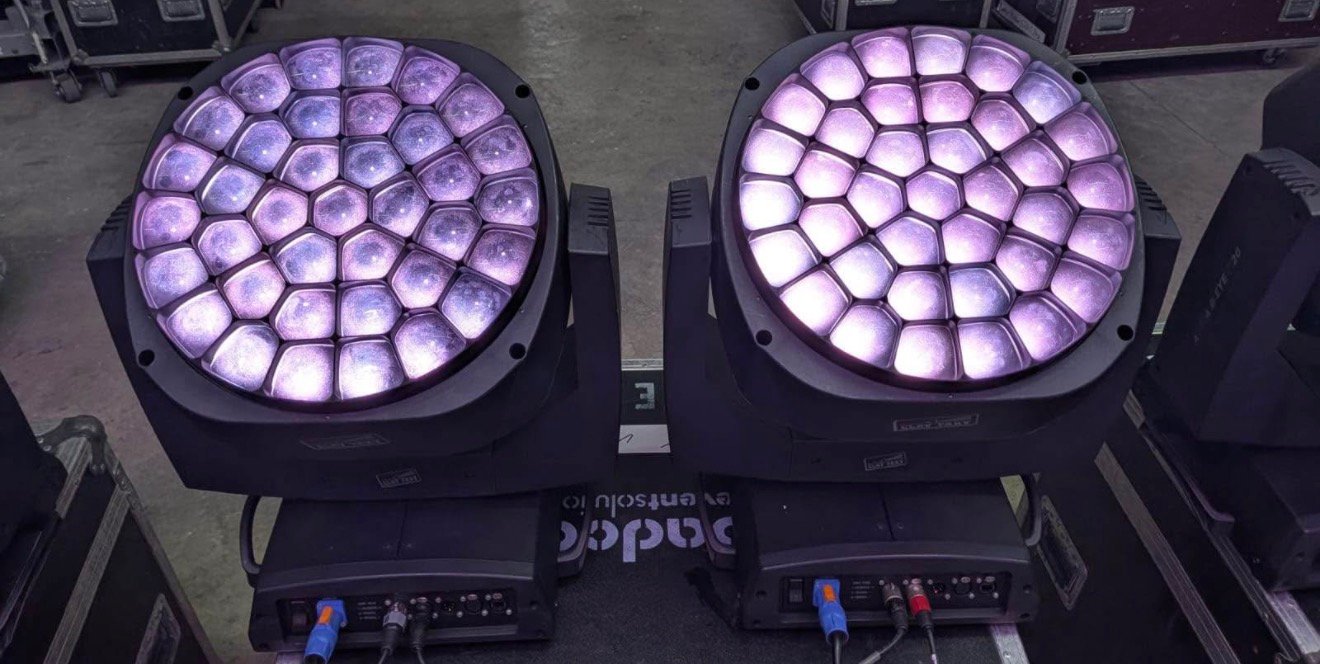
Clay Paky B-Eye K20 is offered in excellent condition at €1,000 per unit. Available stock: 23 units. The quantity is the available inventory count; the price applies to one unit.
Clay Paky B-Eye K20: the A.leda B-Eye model
The Clay Paky B-Eye K20 is identified in the manufacturer’s range as the A.leda B-Eye K20. Its combination of an RGBW LED array, zoom and a rotating front lens brings wash, beam and effects functions together in one moving head. It is a different model from the later HY B-Eye K25 and should not inherit that fixture’s LED power figures.
Claypaky specifies 37 RGBW LEDs rated at 15 W each and a 4–60° electronic zoom range for the K20. The optical range gives the operator a way to change the size and character of the output, while RGBW control provides the basis for color and white-light looks.
Using the front-lens effects
Alongside conventional wash use, the manufacturer describes kaleidoscopic FX and a rotating front lens. This makes the fixture’s visible face part of its effects vocabulary. A design can therefore be assessed in two ways: the light arriving on a surface and the appearance of the source within the audience’s view.
When adding B-Eye K20 units to an existing rig, use the personality for the original A.leda B-Eye model and verify the selected mode against the manual. Check the exact variant before assuming that a K20 CC, A.leda Wash K20 or later HY product will behave identically. The supplied inventory establishes excellent condition and the unit price, but does not establish operating hours, transport cases or optional accessories.
Evaluating the original K20 effects vocabulary
The A.leda B-Eye K20’s rotating lens and RGBW emitter array offer more than a conventional broad wash. A programmer can decide whether the fixture is primarily lighting a surface or forming a visible image in the rig. Those two uses can coexist, but they place different demands on color choices, pixel programming and viewing angle.
Zoom is part of that decision. A tighter field emphasizes the individual beam structure, while a broader field serves a different visual role. The intended result should guide the choice, rather than treating the full available range as something every cue must traverse. Movement can then be added only where it contributes to the composition.
When comparing an original K20 with a HY-family fixture, retain the actual model specifications. A shared B-Eye name does not make LED ratings, effects options or control mappings interchangeable. The most useful fleet comparison is between the exact fixtures and the roles they are expected to perform.
Documentation and related equipment
Clay Paky official product documentation · Clay Paky official reference documentation
There are no reviews yet. Be the first one to write one.