
Lake LMX48
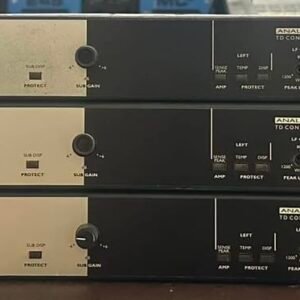
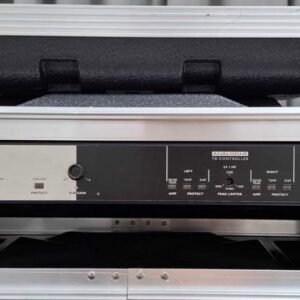
Lake LMX48 is available from Bsound Pro Audio in Excellent condition. The price is €1,700 per unit, with 6 units available. Each unit is offered individually.
LMX48 system processor
The Lake LMX48 is an audio-system processor intended for professional system control. The manufacturer’s current product page identifies it as LMX48. Its published architecture brings analogue and digital signal routing into the Lake processing environment.
The documented connections include 4 × 8 analogue I/O, 4 × 8 AES3 digital I/O and 8 × 8 Dante networked I/O, together with AES50 interfaces. Those different formats give a system designer several routes for receiving and distributing audio. The appropriate arrangement depends on the actual source formats and destinations, rather than assuming that every available interface will be used simultaneously.
Routing and system organisation
In a professional sound system, a central processor may sit between console outputs and the equipment receiving the system feeds. That position makes channel naming, routing documentation and a clear operating plan useful parts of the design. The LMX48’s role should be considered in relation to those signal paths.
When several digital formats are involved, establish which equipment provides each source and which destinations require each output. Then compare that plan with the manufacturer’s interface and processing documentation. This helps separate the task of transporting audio from the task of applying the required system processing.
Official product reference
The current manufacturer information is hosted by Lab Gruppen as part of the Lake product range. Use the linked LMX48 page as the reference for exact model documentation and supported software. LMX48 is a distinct product from LM26 and LM44, so specifications belonging to those earlier processors should not be substituted for this model.
Four analogue inputs and eight analogue outputs
The LMX48’s analogue connection arrangement gives the engineer a useful starting framework for a system-processing role. Identify the incoming feeds that need to enter the processor and the destinations that need separate output treatment. The actual system may also use digital or networked audio, so the physical analogue socket count should be considered alongside the other documented formats.
An output count is most useful when each destination has a defined purpose. A feed may need separate timing, level or processing because of where it goes in the sound system. Record that purpose in the routing plan so that a software channel and a physical destination can be related without guesswork.
Several formats within one routing design
The manufacturer describes analogue, AES3, Dante and AES50 connection options. These formats answer the transport question: how does audio reach the processor and how is it delivered onward? The processing question is separate: which signals need equalisation, crossover treatment or other system adjustments?
Keeping those two questions distinct makes a mixed-format system easier to design. A signal may need to change transport format without requiring the same processing as another signal. Conversely, two signals arriving by different formats may have related processing roles. The routing plan should explain those relationships rather than treating every connector as an independent system.
Input routers and priorities
The LMX48 documentation describes sixteen input routers with configurable priorities. A priority arrangement is useful only when the engineer has defined the intended normal source and the alternative source behaviour. The design should state what is expected to happen if the preferred source is unavailable.
This is a different question from ordinary source selection. Choosing one console for a performance is an operating decision; defining a fallback route is a resilience decision. They may use related routing facilities, but their purposes should remain clear in the configuration and the system record.
Scenes and console-change workflows
The manufacturer describes Scenes for recalling defined signal-flow arrangements. This is particularly relevant where a system needs to accommodate more than one console or operating situation. A useful scene represents an understood routing state, with a clear name and a defined role.
Before creating such states, list the sources that might be selected or combined and the outputs that should remain consistent. Then decide which changes belong to each scene. This prevents a simple source handover from inadvertently becoming a broader change to the system than the operator intended.
For repeat events, retain an explanation of each scene’s purpose alongside the configuration. A short name can identify a state, but it cannot by itself describe every routing decision. Clear documentation helps another engineer understand the intended change before recalling it.
Digital sources and sample-rate relationships
The official LMX48 information describes sample-rate-conversion facilities for digital inputs. That feature belongs within a wider format and clocking plan. The system designer still needs to identify the connected sources and their intended operating formats.
When several digital sources are involved, record which equipment produces each signal and what the destinations require. This makes it easier to distinguish a routing issue from a format or synchronisation issue. The exact manufacturer instructions should guide the chosen connections and settings.
Processing channels and direct routing
Not every transported signal necessarily has the same processing role. The LMX48’s routing architecture should be planned so that processing resources are used where the application needs them. A route that only needs to transport audio and a route that needs loudspeaker-system processing are different design cases.
A useful signal drawing therefore identifies both the transport path and the processing stage. It shows which signals enter the processing structure, which outputs they serve and what each destination is intended to do. This is more informative than a list of interface names without their operating relationships.
Redundancy is a complete-system decision
The manufacturer identifies redundant facilities within the LMX platform, including dual power-supply arrangements. Their usefulness depends on how the rest of the system is designed. A product containing redundant provisions does not automatically make every source, cable, network path or supply in the installation redundant.
Define the failure cases the project needs to address, then review each path through the system. That gives the engineer a reasoned basis for selecting priority settings, network arrangements and power-distribution plans. The aim is a coherent design rather than a collection of individual features with no stated relationship.
Lake Controller and operating records
The LMX48 uses the Lake control environment. A clear device name, meaningful module labels and a recorded signal-flow plan help the software view correspond to the physical installation. Those records are especially useful when a processor serves as a central routing point between consoles and system feeds.
Six individual LMX48 processors are offered at €1,700 per unit in Excellent condition. For an established inventory, compare the intended routing and software workflow with the existing units. For a new design, start with the source formats, required destinations and changeover requirements before deciding how the processor will be configured.
Designing a handover between operating situations
A central processor may need to serve more than one console arrangement without changing the intended destinations of the sound system. In that situation, a useful handover plan states which source becomes active, what should remain constant and which routes are deliberately changed.
The LMX48’s scene and priority facilities should be configured in relation to that plan. An operator-initiated scene change and an automatic fallback are different events, even when they concern related sources. Their purposes should be visible in the names and documentation so that the expected behaviour is understood before a live change is made.
Review the transition as a complete signal-flow question. The source format, input route, processing destination and output assignment all need to agree. A console change is successful only when the intended programme reaches the correct system feeds with the planned operating behaviour.
Keeping a central routing point understandable
A processor with several interface formats can become difficult to understand if its configuration is recorded only as a list of channel numbers. Use names that explain the source, role and destination. Retain a drawing that connects those names to the actual physical and networked paths.
That record is useful during an event change and during maintenance. It allows an engineer to ask a focused question about a particular route instead of treating every visible interface as a possible cause. Where the installation grows over time, update the record alongside the configuration.
For a buyer considering the LMX48, this central-system role is a substantial part of its relevance. Evaluate it against the actual input scenarios and required output destinations, then select the configuration that supports those scenarios. Its capabilities are most useful when they are applied to a defined operating design.
Scene recall from an external control action
The manufacturer describes using the rear-panel GPI to activate a Scene through a custom switch arrangement. This provides another operating route to consider where a project needs a deliberately simple changeover action. Define the Scene and its routing purpose first, then select the supported control arrangement. The external action should have one understood result, documented alongside the normal front-panel or software operation. Its availability is a processor feature and does not add an external switch or other accessory to this product listing.
Manufacturer information and related equipment
Official manufacturer information. Explore processors at Bsound Pro Audio for related equipment.

There are no reviews yet. Be the first one to write one.