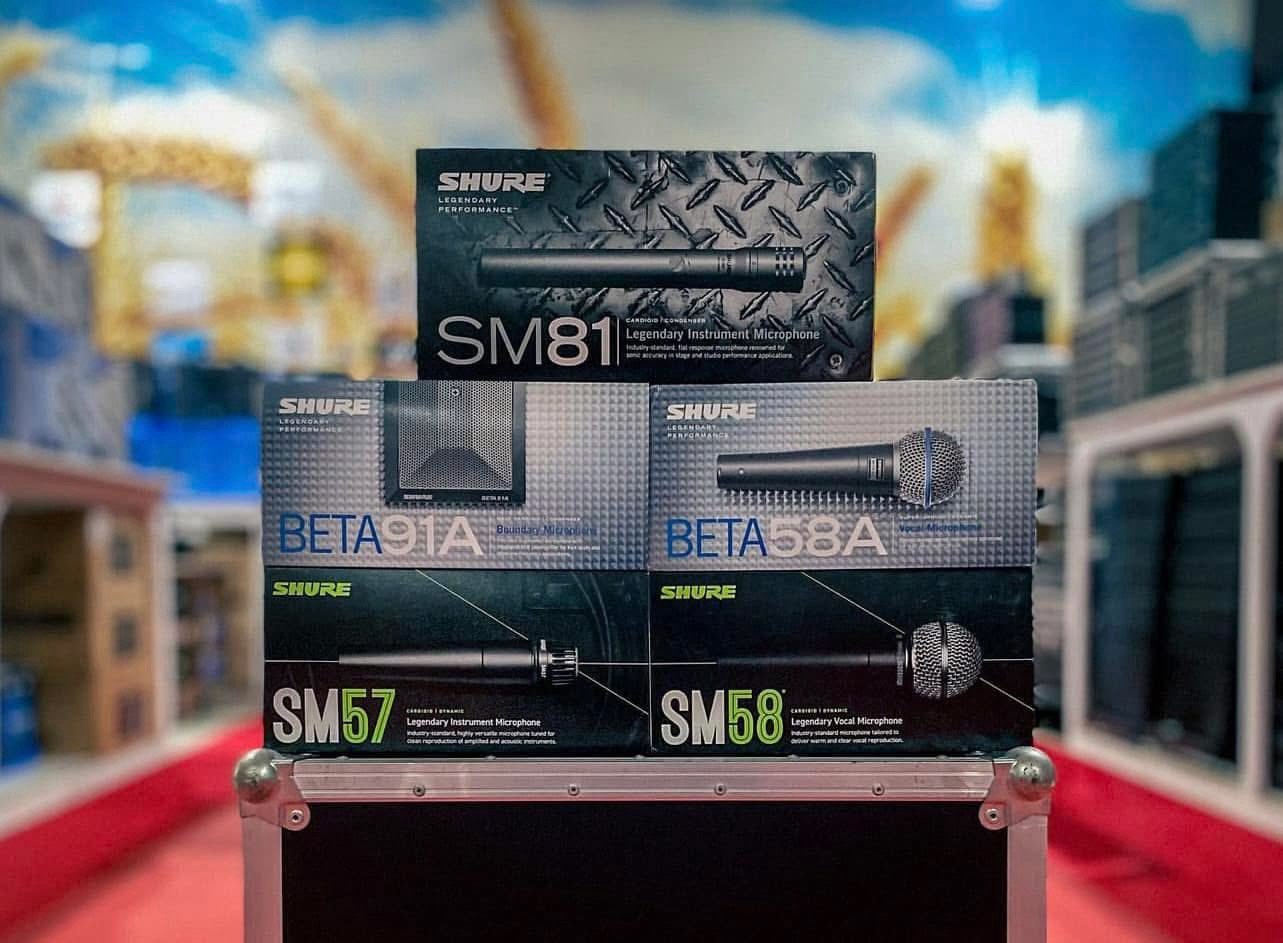
Shure SM81 Microphone
Shure SM81 Microphone
Shure SM81 Microphone is a cardioid condenser instrument microphone for studio recording, broadcasting and sound reinforcement. It has a specified 20 Hz to 20 kHz response and controls for low-frequency shaping and attenuation. Shure identifies acoustic guitar, piano and cymbals among its applications.
Condenser operation and power
The SM81 requires phantom power through a balanced microphone connection. The user guide states that it performs best with 48 V phantom power and can operate at lower supported voltages with reduced headroom and sensitivity. A suitable microphone preamp or console input and balanced XLR cable are therefore part of the planned signal path, rather than included items in this listing.
Low-frequency response choices
The three-position response control provides flat operation, a gentler low-frequency rolloff and a steeper cutoff. The guide specifies 6 dB per octave below 100 Hz for rolloff and 18 dB per octave below 80 Hz for cutoff. These choices can reduce rumble or excessive low-frequency weight without requiring the same adjustment on the recorded track later.
Attenuation and headroom
A 0/-10 dB attenuator changes the signal level entering the microphone’s electronics. The pad is useful with loud close sources where headroom is more important than maximum sensitivity. It is a two-position setting, not a continuously variable gain control. The appropriate setting depends on the sound source and the level reaching the microphone.
Placement for instruments
The cardioid pattern and working distance influence direct sound, spill and room contribution. On acoustic instruments, listening to small position changes often reveals more than selecting an EQ setting in advance. Very close positioning also increases low-frequency response through proximity effect, so the response switch and distance should be evaluated together.
Exact model and offered stock
The stock is the named SM81 Microphone model in excellent condition, with thirty units available at the displayed price per microphone. No stereo matching, calibration record or acoustic test result is claimed. Clips, windscreens, attenuator locks, cables and storage cases are not added to the sale description from a standard retail-box list.
Choose a flat starting response for the right reason
The SM81’s flat-response option is useful when the aim is to begin with the instrument’s captured balance rather than a pronounced vocal-style presence contour. That does not mean every position will sound neutral: the instrument radiates different components in different directions, and the room contributes reflections. Put the microphone where it captures the balance wanted, then compare the response settings. A flat switch position is an electrical/acoustic design choice within the microphone, not a promise that the entire recording becomes flat. The practical advantage is having a clear starting option alongside the model’s deliberate low-frequency controls.
Separate the pad from a bass filter
The -10 dB attenuator reduces signal level without being a bass-tone control. The low-frequency switch changes the tonal response. Use them to answer different observations. If a loud source is overloading the microphone’s electronics, attenuation may create useful headroom; if the sound contains too much low-frequency energy, the response switch or position may be relevant. Changing both at once makes the result harder to judge. Begin with a known configuration, listen to representative material and adjust the control that addresses the actual issue. The SM81 provides both tools so the engineer can make that choice at the microphone rather than treating every problem as equalisation later.
Start an acoustic-guitar position with a balanced area
Shure’s guitar guidance uses the neck/body region as a practical starting point for a balanced acoustic-guitar pickup. With an SM81, compare that area with small changes toward the bridge or sound hole while keeping the player comfortable. Moving toward the sound hole can add low-frequency weight; a different position may preserve more articulation. Record a short phrase at each position and compare at similar playback levels. The goal is not to follow a diagram rigidly, but to identify a repeatable placement for that guitar and arrangement. The stand should let the player perform normally rather than forcing the instrument into an awkward position to meet the microphone.
Judge piano placement against the whole instrument
A piano is a large sound source, so a position that strongly captures one string region may not represent the entire performance. Listen to the low and high registers as well as the passages actually used in the piece. The SM81 is documented for piano applications, but the number and positions of microphones depend on the instrument, room and reinforcement requirements. Start with a clear objective: a natural full-instrument pickup, stronger isolation, or a particular place in a busy arrangement. Then compare the captured result. Adding microphones should address that objective, not simply increase the channel count without checking the combined sound.
Use cymbal detail in context
The SM81 is also used on cymbals and other acoustic percussion. When a separate microphone is added to a drum recording, listen to its contribution with the overheads and other drum microphones. The useful question is what it adds to the finished kit balance, not whether it sounds bright when soloed. A close position may provide more direct detail but can also change the relationship between one cymbal and the rest of the kit. Adjust distance and angle with the drummer’s movements in mind. The available pad and bass-response settings provide control, while source tuning, playing and placement still determine much of the result.
Balance horn detail and mechanical sound
For saxophone and related acoustic sources, Shure’s application guidance distinguishes aiming into the bell from placing the microphone nearer the sound holes. These positions can emphasise different aspects of the instrument and different amounts of key noise. An SM81’s cardioid pickup gives a direction to work with, but the instrument is not a sound source that radiates only from one point. Make a short comparison while the musician plays across the intended range. Choose the position for the sound needed in the mix and allow enough physical space to perform. This is a placement option, not a claim that a stand, clip-on mount or instrument is included with the microphone.
Consider stereo technique separately from unit quantity
Two SM81 microphones can be used as part of a stereo recording technique, but buying two available units does not establish that they are a factory-matched pair. A stereo arrangement also requires a considered geometry and input setup. Compare the balance when the channels are heard together and when the recording is reduced to mono. If the combined result changes unexpectedly, revisit position before assuming that more processing is required. The available stock count gives purchasing flexibility; it is not a statement about calibration, matching or documented acoustic measurements of the offered microphones. Those are separate claims that would require their own evidence.
Allow the recording environment into the decision
The microphone’s directional pattern reduces some unwanted sound while retaining a contribution from the room and other sources. In a quiet session, that ambience may be useful. On a crowded stage it may compete with the intended instrument. Compare a closer position for separation with a more distant position for a broader picture, then evaluate the result in context. The low-frequency filter can address rumble or excess bass, but cannot distinguish every wanted low note from unwanted sound at the same frequency. Good placement and an appropriate stage or room arrangement make the SM81’s controls more effective than expecting the controls to replace those decisions.
Confirm the receiving input before the session
The SM81 needs a suitable phantom-powered balanced microphone path. Check the preamp or console instructions for how phantom power is supplied, then set input level using the actual instrument. The microphone’s pad, the preamp gain and later channel processing are separate stages. A low recording level can come from the receiving setup, while an overloaded input may occur after the microphone itself. A brief test through the complete chain helps identify the stage that needs adjustment. This listing covers the named microphone in excellent condition; it does not add an external phantom supply, interface, microphone cable or recording application to the offered contents.
Recognise the two different response controls
The SM81’s attenuator and low-frequency switch solve different problems. The pad changes level without deliberately changing the frequency response; the low-frequency switch changes the bass balance. If a loud acoustic source overloads the microphone’s input electronics, lowering a console fader is too late to address that stage. If floor rumble is the problem, a level reduction alone lowers the wanted instrument as well. Identify the symptom before changing a control. Keeping these functions separate makes settings easier to document and avoids mistaking a quieter signal for an improvement in tone.
Compare a room contribution intentionally
An SM81 positioned farther from an acoustic instrument may capture a more integrated sound from that instrument, together with more of the room. That can be useful in a quiet recording space and less useful beside a loud stage source. Before selecting the position, decide how much of the surrounding space belongs in the production. Compare short recordings at matched listening level, retaining the same playing phrase and response-switch setting. The wide frequency response is a useful capture capability; distance and orientation still establish what acoustic scene reaches the capsule in the first place.
Condition, availability and price
Shure SM81 Microphone is offered in Excellent condition. Available stock: 30. Unit price: €150. The quantity is the available stock count and the price applies to one listed unit.
Manufacturer documentation
Read the official Shure SM81 user guide.
Product photograph
This listing is for the Shure SM81 microphone only. The other microphone models pictured on their boxes are not included.
Related equipment
Browse Microphones at Bsound Pro Audio.
There are no reviews yet. Be the first one to write one.