Shure SM58
Shure SM58 vocal microphone
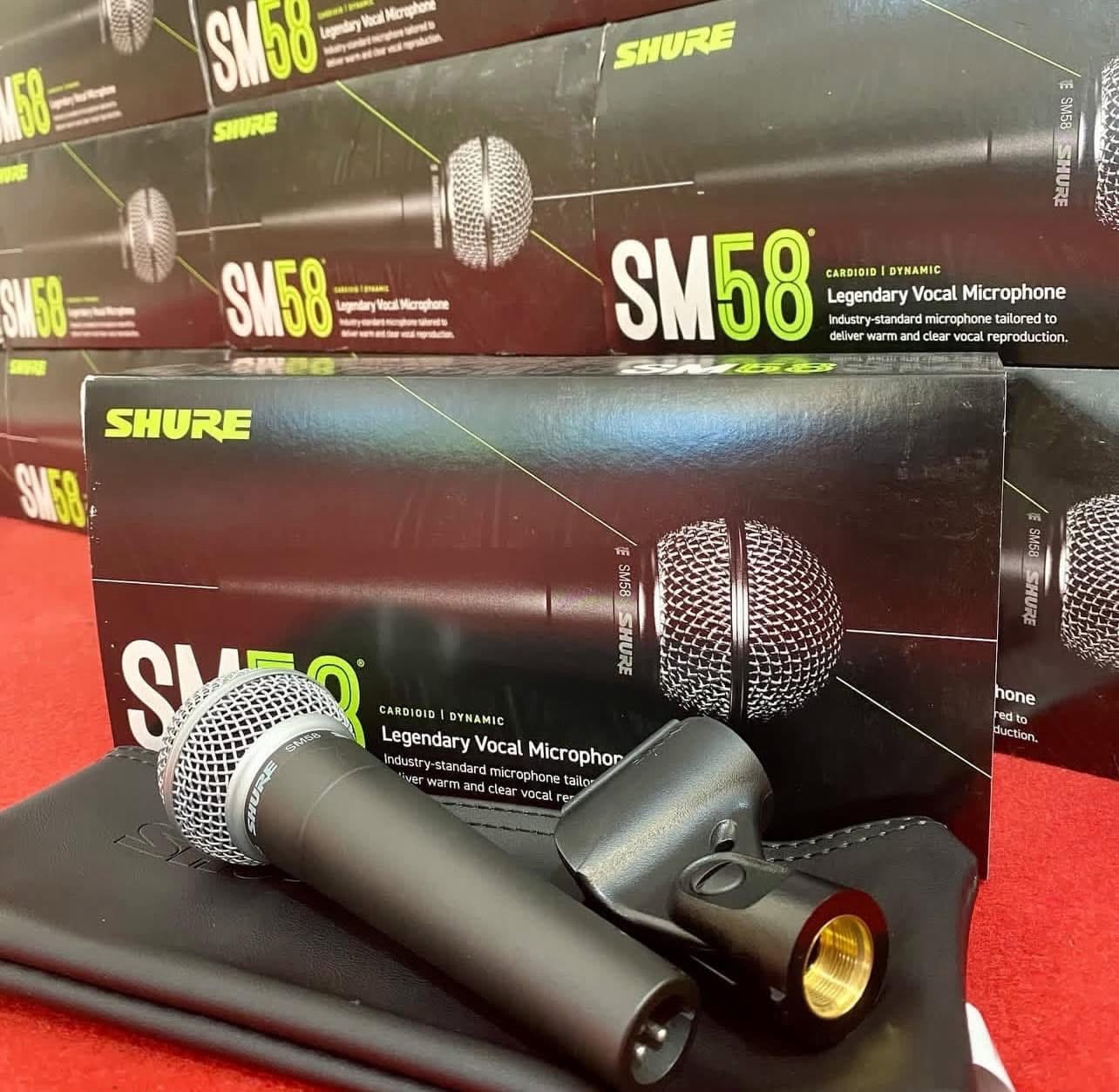
Shure SM58 is a wired dynamic cardioid microphone designed for singing and speech. Its response is tailored for voice, with a presence emphasis through the midrange and controlled bass behaviour. The spherical steel-mesh grille and internal wind/pop filtering are part of the familiar handheld format.
Cardioid directionality
The front of the microphone is its main pickup direction. A cardioid pattern reduces pickup toward the rear, which makes the orientation of stage monitors and other loudspeakers relevant to a live setup. It still picks up room sound and nearby instruments according to their level and position; a directional microphone is not a substitute for sensible placement.
Close and distant voice positions
The SM58 guide shows close vocal positions for a strong direct sound and greater isolation. Moving farther away reduces the bass emphasis and admits more of the surrounding space. This is the practical effect of changing working distance and proximity effect. Keeping a repeatable distance helps avoid unwanted tonal and level changes during a performance.
Handling and grille technique
The pneumatic suspension reduces handling noise, while the grille’s filter helps control breath noise. Holding the microphone by its body leaves the grille and acoustic openings unobstructed. Cupping or covering the grille can change the intended directional behaviour, so normal handheld technique remains important even with a robust stage microphone.
Connection and variant
The SM58 uses a three-pin XLR output. Shure documents switched variants such as SM58S, so an on/off switch is not assumed from the unsuffixed SM58 name. The product family also appears in different retail configurations with cables or accessories; those configurations do not determine the contents of this used-stock listing.
Inventory basis
Eighty SM58 microphones are available in excellent condition at the displayed individual price. This is one product page for the model with an available stock count, rather than an eighty-microphone bundle. No microphone clip, bag, cable, stand or warranty is added beyond the seller’s supplied condition and commercial details.
Begin with the performer’s working distance
For a live voice, the useful microphone position is one the performer can maintain while singing or speaking naturally. With the SM58, a close position gives a strong direct signal and a different low-frequency balance from a more distant one. Agree a comfortable distance during soundcheck, then listen through the intended system. If the performer repeatedly moves between very close and much farther away, both level and tone will change. A clear starting technique makes the engineer’s job easier than trying to correct every movement with a fader. This is a way of using the model’s directional vocal design, rather than a promise of identical tone at every distance.
Understand the tailored vocal response
The SM58’s response is intentionally shaped rather than presented as a laboratory-flat reference for every application. Its presence emphasis supports vocal articulation, while its low-frequency contour is designed around close vocal use. This makes the frequency-response range only one part of the selection decision. A source may sound full at close range even though the response chart rolls off at the bottom. Moving farther away changes that relationship. Compare the microphone with the intended voice and stage arrangement, listening for intelligibility and musical balance, rather than assuming that the widest published frequency range automatically produces the most useful live vocal sound.
Place loudspeakers around the cardioid pattern
The SM58’s strongest rejection is toward its rear. A practical stage layout uses that direction when positioning a nearby monitor, while keeping the microphone aimed toward the voice. Consider the performer’s actual movement: a microphone that is turned toward a wedge no longer presents the same rejection direction to it. Test the normal positions before the performance. Gain before feedback is a property of the entire acoustic loop, including loudspeakers, room and placement; it is not a fixed level guaranteed by the microphone model. The cardioid pattern is a useful tool within that loop when its orientation remains clear to the performer and engineer.
Choose one microphone position before changing EQ
When a voice sounds thin or heavy, compare distance and angle before making a large equalisation change. A close position can emphasise bass, while moving away admits more surrounding sound. Changing the physical setup first may produce a more useful starting point than compensating for a position that will not remain consistent. After that, judge processing in the full mix rather than only through a soloed microphone. The aim is a voice that works with the performance. The SM58 provides a familiar response and directional pattern, but no factory setting can know the singer, arrangement and room in which this stock will be used.
Keep the grille acoustically open
The spherical grille contributes to the microphone’s acoustic behaviour as well as its physical shape. Holding the body leaves that structure clear. Covering or cupping the grille can change the intended response and directionality, which in turn changes how the microphone interacts with the stage system. If a performer uses that technique intentionally for an effect, the engineer still needs to understand the consequence. For ordinary vocal reinforcement, unobstructed handling provides a more predictable starting point. The pneumatic suspension reduces handling-noise transmission, but it does not make every tap, cable movement or change of grip inaudible. Good handling and the microphone’s construction work together.
Compare the SM58 and SM57 by application
Shure explains that the two models share a cartridge design but use different grille arrangements. The SM58’s ball grille includes pop filtering for vocal use, while the SM57’s smaller resonator/grille assembly suits close instrument positioning. The different acoustic environment around the diaphragm contributes to their response differences. That makes the choice a practical one, rather than a simple ranking of quality. For a handheld vocal role, the SM58’s shape and filter arrangement are relevant advantages. For an instrument position needing a smaller front assembly, the SM57 may be more convenient. This listing remains the SM58, with no model substitution or interchangeable-accessory claim.
Compare a cardioid choice with a supercardioid choice
The Beta 58A is a distinct Shure vocal model with a supercardioid pattern and a different output and response profile. Choosing it instead of an SM58 changes how nearby monitors should be positioned and how the input level is set. Greater output is not by itself a guarantee of a better result for a particular singer. When adding SM58 stock to an existing kit, its familiar cardioid behaviour may be part of the reason to keep that model consistent. The comparison helps explain the exact product being offered; it does not imply that Beta capsules, wireless transmitters or other microphones accompany these wired SM58 units.
Set the input for a representative performance
Ask for the real performance voice during soundcheck, including stronger passages, then establish input gain with appropriate headroom. A spoken test at a much lower level than the performance can lead to a misleading setting. Once that input stage is sensible, use the mix controls for balance. If distortion appears, inspect where it begins in the signal path rather than assuming that a lower loudspeaker level will repair it. The SM58’s analogue XLR output is one stage of the system; the preamp, mixer, processing and amplifier stages remain separate. The microphone’s durability does not remove the electrical limits of the equipment receiving its signal.
Plan a consistent microphone kit
For a venue, rehearsal room or production inventory, clear identification helps keep microphone choice repeatable. The supplied SM58 name does not specify the switched SM58S variant or any cable package. Record the actual variant when assigning units to a kit and select suitable supporting equipment for the intended role. Storage and any routine maintenance should follow the manufacturer’s current guidance for the model. The stock quantity of eighty makes individual allocation possible, but this page still prices one microphone at a time. It makes no claim that the available units form a calibrated matched set or that accessories from a retail bundle are included.
Prepare for spoken introductions as well as singing
The SM58 is also a speech microphone. At an event with several speakers, a brief explanation of where to hold it can be more useful than a complicated processing change. Ask each speaker to keep the front directed toward the mouth and maintain a comfortable, repeatable distance. Check quiet speech and louder introductions through the actual PA before the audience arrives. A person turning to address someone beside them may also turn the microphone away from the voice. Anticipating that movement makes the operating setup more understandable and can preserve intelligibility without asking the sound engineer to chase every change.
Keep multiple open microphones purposeful
With several SM58s on stage, each open microphone can contribute surrounding sound in addition to its intended voice. Use the number required by the performance and organise muting around actual use. A microphone that is waiting for a later speaker does not need to add an unnecessary acoustic path to the current mix. This is particularly relevant when a large stock count supports many simultaneous positions. The available eighty units are inventory capacity; a particular production’s input list, performer positions and monitor arrangement determine the number that should be deployed and open at a given moment.
Condition, availability and price
Shure SM58 is offered in Excellent condition. Available stock: 80. Unit price: €40. The quantity is the available stock count and the price applies to one listed unit.
Manufacturer documentation
Read the official Shure SM58 user guide.
Related equipment
Browse Microphones at Bsound Pro Audio.

There are no reviews yet. Be the first one to write one.