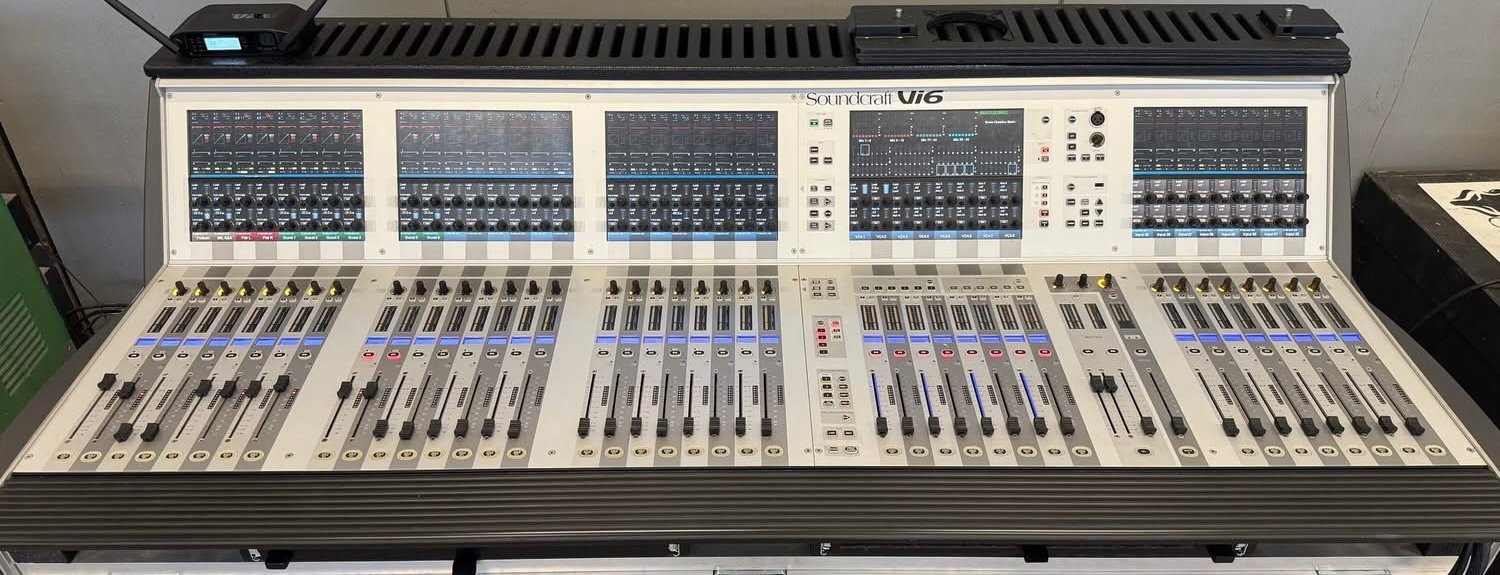
Soundcraft Vi6
Soundcraft Vi6 is a large-format digital mixing console built around the Vistonics II operating interface. Its surface gives engineers 32 input faders and a separate master section, with channel information and parameter controls combined across its displays. The Vi6 is part of Soundcraft’s discontinued Vi generation.
Soundcraft documents flexible input processing, multifunction output buses and integrated processing from Lexicon and BSS. A Vi6 system can involve a control surface, local rack and remote stagebox, but the inventory names only Vi6. This listing therefore does not assert that separate racks, interface cards, stageboxes or cases are supplied. The exact physical system configuration should be identified independently of the console family’s maximum capabilities.
Model overview
- Vistonics II digital-console interface.
- 32 input faders plus master-section controls.
- 48 kHz console family.
Vi6: a surface built around the channel view
Vistonics II places the visual representation of a channel’s functions close to the physical controls used to change them. For an engineer comparing surfaces, that relationship matters as much as the maximum channel count. A clear view of the selected processing can reduce the mental step between finding a function and adjusting it; it does not remove the need for an organized input list and console layout.
The Vi6’s 32 input faders and separate master area provide a broad physical operating surface. Think about which sources should remain visible together during a performance. An input that needs frequent attention may deserve a different place in the layout from a source that is mainly checked during setup. The practical question is how quickly the operator can reach the controls that the production actually uses.
Processing capacity and physical connections
Digital mixing capacity and the number of physical sockets are different quantities. Soundcraft’s Vi6 documentation describes capacities that depend on the system’s DSP and I/O arrangement. The console name alone does not establish which local rack, stagebox or interface configuration is included in a particular used sale.
For that reason, compare the full signal path when planning a Vi6 deployment: where the microphones connect, where processing takes place, how stage signals reach the system and where outputs must appear. The required path should be established before relying on a maximum-input headline. The inventory here names Vi6 and does not enumerate those separate system components.
Buses, effects and the intended mix
Soundcraft’s Vi6 product information identifies Lexicon and BSS processing within the console platform. The useful buying comparison is how the processing will serve the intended mix. Effects returns, output treatment and group organization each have a different purpose; a large feature set is most valuable when those roles are clear.
An auxiliary mix can be used for a separate listening requirement, while a group can organize several signals for a common processing or level task. A matrix is another stage of routing and combination. The available bus arrangement should be checked against the show’s actual output plan, rather than selected solely by the largest published bus count.
Snapshots, shows and a repeatable workflow
A digital console’s recall facilities are most useful when a show file is treated as a structured project. The operator needs to decide what changes between cues and what should remain stable. Careful preparation can make a cue-driven performance easier to navigate, while a poorly planned recall can produce an unintended change despite the console functioning correctly.
HARMAN’s official Vi showfile note distinguishes the show container, snapshot data and product-specific settings. It also explains that an I/O configuration record is compared when a show moves to another console. That is a useful reminder that a transferable show file is not proof of identical hardware or a complete port-for-port match. Confirm the actual I/O and layer arrangement before using an existing project on another Vi system.
A Vi6 purchase in the context of an existing rig
For a company already using Vi6, surface familiarity and the correct original documentation can be valuable parts of the comparison. Keep this model distinct from later Vi products and from the smaller Vi1. A similar operating concept does not establish the same physical layout or installed system capacity.
The seller states excellent condition and offers the listed number of consoles at the stated price for each. That commercial information should remain separate from the system plan: no additional rack, stagebox, interface card or external processor is established as part of this inventory line. The intended deployment should be checked against the exact equipment configuration.
Condition and unit price
Soundcraft Vi6 is offered in Excellent condition. Available stock: 1 unit. The price is €4,000 per unit; the stock count is the available quantity and does not describe a package or combined price.
Official Vi documentation
Read HARMAN’s official Vi showfile reference.
There are no reviews yet. Be the first one to write one.