
d&b audiotechnik D20
d&b audiotechnik D20 is available from Bsound Pro Audio in Excellent condition. The price is €2,500 per unit, with 8 units available. Each unit is offered individually.
D20 four-channel amplifier
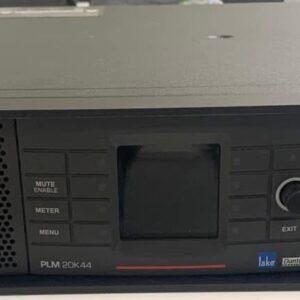
The d&b audiotechnik D20 is a four-channel amplifier in a 2U chassis. The manufacturer specifies a maximum output of four channels at 1600W into 4 ohms and provides onboard digital signal processing. A 3.5-inch colour touchscreen and rotary encoder form the local control interface.
The D20 combines amplification and system processing in a single product. For an established d&b installation or mobile system, that means the amplifier should be considered together with the exact loudspeaker configuration it will serve. Channel allocation and the selected setup are fundamental parts of the operating arrangement.
Signal adjustment and operation
The official product information describes independently adjustable delay and two sixteen-band equalisers per channel. These functions serve different tasks: delay addresses timing relationships, while equalisation adjusts the frequency response of the routed signal. The manufacturer’s setup documentation provides the reference for selecting a loudspeaker configuration and applying those controls appropriately.
A local touchscreen is useful when an engineer needs to inspect or adjust an amplifier at the rack. Clear channel labelling and a recorded system layout remain valuable even where remote control is part of the wider installation, because the physical amplifier still needs to be identifiable during setup and service.
Match the amplifier to the system
Start with the actual loudspeaker models and the required channel count, then consult the D20 documentation for the supported operating arrangement. The range of supported loudspeaker setups should be checked against the current manufacturer guidance and the firmware in use; it should not be assumed to cover every d&b model.
The D20 is listed here by its exact model name, with stock and price applying to individual amplifiers. The published manufacturer figures describe the product design and specified operating conditions. They are not a substitute for measurements or commissioning of the complete system in which a purchased amplifier will be used.
A system amplifier within a d&b signal plan
The D20 combines four amplifier channels with d&b system processing. That makes it useful to think about the product as part of a defined loudspeaker system rather than as four unrelated power outputs. The selected loudspeaker setup, the channel allocation and the physical output connections should describe the same arrangement.
Start with the exact loudspeaker models and the role each needs to perform. Then identify the appropriate D20 setup and the amplifier outputs involved. This is clearer than beginning with the available amplifier channels and connecting whatever cabinets happen to be nearby.
Output modes and channel relationships
The manufacturer’s D20 manual describes output operating modes and combined arrangements assigned to amplifier-channel pairs. This makes the chosen output configuration an important part of the system plan. The presence of four physical amplifier channels should not be reduced to a universal assumption that every output arrangement is the same.
For an established rack, record the current operating mode before making a change. Compare the displayed loudspeaker configuration with the actual connected cabinets and the cable plan. If a mode changes the way channels are used, the documentation and physical labels should be updated together.
This is especially helpful where the same amplifier model serves several system roles. A D20 used for one loudspeaker arrangement may need a deliberately different configuration from another D20 in the same inventory. Consistency is valuable where the application is the same; differences should be explained where the application is different.
Input routing and signal format
The D20 setup interface separates input selection and routing from the output arrangement. That separation reflects two different questions: where the programme signal comes from and what the amplifier will drive. A sound-system drawing should answer both.
Where digital signals are involved, the format and clocking relationship should also be established. A source being connected physically does not by itself prove that the selected input is receiving the intended audio. Confirm the input route and status before investigating a loudspeaker or output-side issue.
A useful rack record includes source names, input assignments and the destination of each amplifier output. This gives the engineer a practical way to trace a signal through the system and makes local indications more meaningful during setup.
Delay and equalisation as different adjustments
The D20 provides delay and equalisation facilities within its processing platform. Delay concerns timing, while equalisation concerns frequency balance. Their controls may be accessed from the same product, but the engineering reasons for changing them are different.
For example, a timing relationship between loudspeaker positions is a different issue from a tonal adjustment to a feed. A clear system plan identifies which question a setting is intended to address. This makes the final configuration easier to review and avoids using one type of processing to obscure a different underlying problem.
Published parameter ranges describe what the device allows. They do not select an appropriate value for a venue or loudspeaker arrangement. Settings should follow the relevant d&b setup information and the requirements of the complete system.
Local control through touch and rotary adjustment
The D20’s touchscreen gives an engineer a local view of the amplifier, while the rotary encoder provides a physical adjustment control. This combination is useful when the rack itself is the working point. A clear device name and a comprehensible channel plan help connect that local view with the wider system.
Local operation remains valuable even when remote supervision is used elsewhere in an installation. The engineer at the rack still needs to identify the correct amplifier, understand what it serves and inspect the relevant status information. The product interface and the rack labels should support the same understanding.
Supported loudspeaker setups
The D20 is associated with a defined set of d&b loudspeaker setups. Support should be checked against the exact manufacturer information and firmware in use. The d&b brand name alone should not be treated as a promise that the amplifier supports every loudspeaker the company has produced.
For a replacement or inventory expansion, compare the required setup with the amplifier’s available configuration. For a new application, make that check before selecting the rest of the rack. It is easier to design around a verified combination than to discover later that a broad compatibility assumption was incorrect.
Interpreting output ratings
The stated output capability is tied to load and measurement conditions. It helps describe the amplifier, but it should not replace the model-specific loudspeaker and setup guidance. Keep per-channel values distinct from total-system figures and retain the load condition when making comparisons.
The same principle applies to the complete sound system. Amplifier capability, loudspeaker behaviour, signal processing and coverage all contribute to the result. None of them is fully described by a single power figure.
Buying for a defined operating role
Eight individual D20 amplifiers are available in Excellent condition at €2,500 per unit. A buyer with an existing d&b system can compare the required loudspeaker setups and rack arrangement with the D20 documentation. A buyer planning a new configuration should first establish the cabinet models, channel allocation, input format and operating workflow.
The manufacturer’s product information and D80/D20 control tutorials provide the appropriate model reference. They describe the product’s intended operation, while the sale listing provides the seller’s condition, stock count and individual unit price.
Commissioning records for a four-channel system amplifier
A useful D20 configuration record identifies more than the amplifier model. It should state the loudspeaker setup associated with each channel or channel pair, the selected input route and the physical output destination. That record gives an engineer a direct comparison between the local display and the equipment connected to the rack.
When reviewing a setting, ask what part of that arrangement it belongs to. A loudspeaker setup, an input selection, a channel level and a delay value do not all answer the same question. Keeping their purposes distinct helps an operator decide which information must be checked when a source changes or an amplifier is moved to a different system role.
The manufacturer provides separate D80/D20 tutorial sections for navigation, input modes, output modes, remote view and channel setup. That division is a useful guide to the subjects an engineer needs to understand. A complete operating plan considers all of them, rather than assuming that selecting a loudspeaker name completes every part of the configuration.
For an existing fleet of D20 amplifiers, retain device identities that make sense both at the rack and in the control environment. This helps a replacement or expansion remain traceable to the actual installation. It is a practical part of professional system operation, especially where several physically similar amplifiers serve different destinations.
The value of an established system-amplifier platform is therefore assessed through the intended combination of cabinets, control workflow and signal distribution. The D20’s four-channel architecture provides the framework, while the chosen configuration defines its job.
Manufacturer information and related equipment
Official manufacturer information. Explore amplifiers & controllers at Bsound Pro Audio for related equipment.
See the official d&b D80/D20 amplifier tutorials for the manufacturer’s input, output and channel-setup guidance.

There are no reviews yet. Be the first one to write one.